
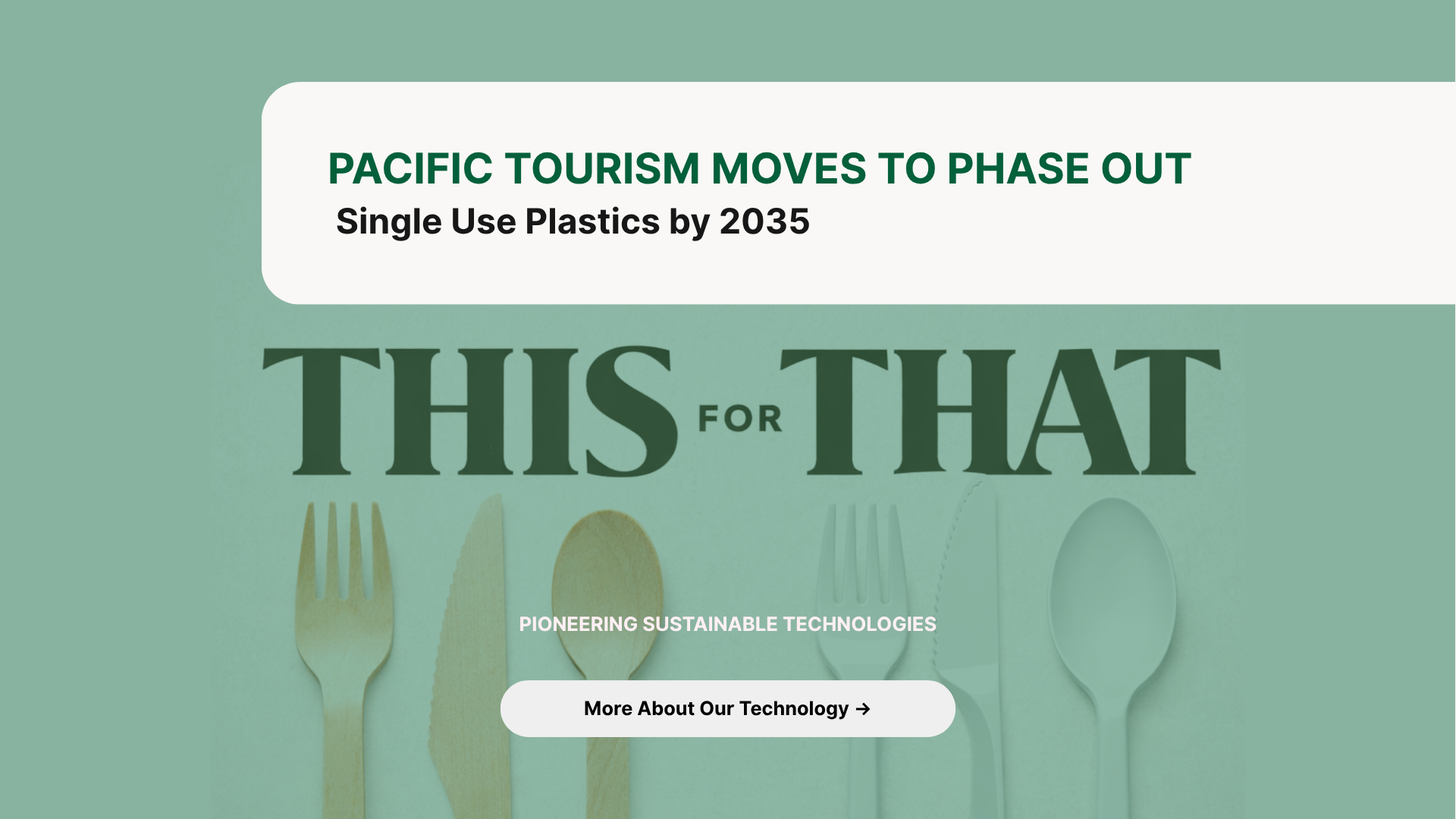
Tourism is one of the most important economic sectors across the Pacific Islands. It supports employment, drives infrastructure development and connects local communities to global markets. However, it also generates significant environmental pressure, particularly through the use of single use plastics.
In response, regional authorities and tourism organisations are accelerating efforts to transition toward more sustainable systems. A key milestone is the commitment to phase out single use plastics by 2035, supported by a structured toolkit developed by the Sustainable Tourism of the Pacific Tourism Organisation.
This initiative represents more than a regional environmental policy. It reflects a broader global shift in how tourism, procurement and packaging are managed. For Australia and neighbouring markets, the implications extend into trade, supply chains and sustainability standards.
Why single use plastics are a priority in tourism
Single use plastics are widely used across tourism operations. Items such as water bottles, food packaging, straws, cutlery and toiletry containers are distributed in large volumes across hotels, resorts, cruise operations and events.
In island environments, waste management infrastructure is often limited. This means that plastic waste is more likely to enter natural ecosystems, including beaches, reefs and marine habitats.
Plastic pollution has direct economic consequences for tourism. Environmental degradation reduces the attractiveness of destinations and can affect visitor experience. For regions that rely heavily on natural beauty, maintaining environmental quality is essential.
The decision to phase out single use plastics reflects both environmental necessity and economic strategy.
The role of the SPTO toolkit
The Pacific Tourism Organisation has developed a practical framework to guide businesses through this transition. The Toolkit for Phasing Out Single Use Plastics provides structured steps to reduce procurement of problematic materials and adopt sustainable alternatives.
The toolkit includes simplified audits that allow businesses to identify where single use plastics are used within their operations. It also provides procurement guidance, helping organisations transition to alternative materials and suppliers.
Importantly, the framework is designed to be scalable. Small operators, as well as large resorts and international chains, can apply the same principles.
The target is clear. Achieve 100 percent reduction in single use plastic procurement by 2035 through incremental and measurable steps.
Alignment with global tourism initiatives
The Pacific initiative aligns with broader global frameworks such as the Global Tourism Plastics Initiative. This program, supported by the United Nations Environment Programme and the World Tourism Organization, encourages businesses to eliminate unnecessary plastics and improve material management.
By aligning with these initiatives, Pacific tourism operators are positioning themselves within global sustainability standards. This has implications for certification, international partnerships and market access.
Tourism is a competitive industry. Sustainability credentials are increasingly influencing traveller decisions. Operators that demonstrate measurable environmental performance gain a strategic advantage.
Procurement is becoming the central lever
One of the most significant aspects of the SPTO toolkit is its focus on procurement. Rather than relying solely on waste management, the framework targets the source of the problem.
By changing purchasing decisions, businesses can eliminate problematic materials before they enter the system. This reduces waste volumes, simplifies operations and improves compliance with environmental standards.
Procurement policies now include requirements for suppliers to provide alternatives to single use plastics. This creates ripple effects across supply chains, influencing manufacturers and distributors.
For Australian suppliers exporting to Pacific markets, this shift is particularly relevant. Products that rely on single use plastic packaging may face declining demand or require redesign.
Implications for Australian trade and supply chains
Australia maintains strong economic and tourism links with the Pacific Islands. Changes in regional standards therefore have direct implications for Australian businesses.
Exporters supplying food, beverages, hospitality products and packaging materials will need to align with new procurement requirements. This may involve transitioning to biodegradable, reusable or alternative packaging formats.
Import and export licensing may also evolve to reflect sustainability criteria. Products that do not meet environmental standards could face restrictions or reduced market access.
This trend is consistent with broader global developments. Packaging is increasingly evaluated not only for cost and performance, but also for environmental impact.
Circular economy principles in tourism
The phase out of single use plastics is part of a wider transition toward circular economy models. In this framework, materials are designed to be reused, recycled or safely returned to the environment.
For tourism operators, this means rethinking how products are sourced, used and disposed of. Refillable systems, reusable service models and verified biodegradable materials are becoming more common.
The SPTO toolkit supports this transition by providing practical steps that integrate circular economy principles into daily operations.
This shift reduces dependence on disposable materials and creates more resilient systems.
Challenges in implementation
While the direction is clear, implementation presents challenges. Island economies face logistical constraints, including limited access to alternative materials and higher transport costs.
Replacing single use plastics requires coordination across multiple stakeholders, including suppliers, regulators and local communities.
Education and training are also essential. Staff and customers must understand new systems and adapt behaviour accordingly.
Despite these challenges, the long term benefits outweigh the short term complexity. Reduced waste, improved environmental outcomes and stronger market positioning support the transition.
The role of material innovation
Material innovation plays a critical role in enabling the phase out of single use plastics. Alternatives must meet functional requirements while delivering improved environmental performance.
Biodegradable materials, reusable systems and redesigned packaging formats are all part of the solution. However, performance must be verified to ensure that alternatives do not create new environmental issues.
This is particularly important in marine environments, where incomplete degradation can still contribute to pollution.
For tourism operators, selecting verified materials is essential to maintaining credibility and achieving sustainability targets.
A regional signal with global relevance
The Pacific Islands initiative sends a strong signal to the global tourism industry. Even regions with limited infrastructure are committing to ambitious plastic reduction targets.
This reflects a broader recognition that environmental sustainability is no longer optional. It is a core component of economic resilience and competitiveness.
Other regions are likely to follow similar pathways. As this occurs, standards will become more consistent across markets.
For businesses operating internationally, aligning with these trends early reduces future risk.
What this means for the future of tourism
Tourism is undergoing a structural transformation. Environmental performance is becoming as important as service quality and location.
The phase out of single use plastics is one element of this shift. It reflects changing expectations from regulators, communities and travellers.
Businesses that adapt quickly will be better positioned to compete in a sustainability driven market. Those that delay may face increasing pressure from both policy and consumer demand.
Conclusion
The commitment to phase out single use plastics in Pacific tourism by 2035 represents a significant step toward more sustainable industry practices. Supported by practical tools and aligned with global initiatives, this transition is reshaping procurement, supply chains and environmental standards.
For Australia and regional partners, the implications extend beyond tourism. Packaging, trade and material innovation are all influenced by these changes.
As sustainability becomes a defining factor in global markets, initiatives like this highlight the direction of travel. Reducing single use plastics is no longer a niche objective. It is becoming a baseline expectation for responsible and competitive business operations.
Key Summary
- Pacific tourism aims to eliminate single use plastics by 2035
- The SPTO toolkit provides structured guidance for businesses
- Procurement changes are central to reducing plastic use
- The initiative aligns with global tourism sustainability frameworks
- Australian exporters must adapt to new packaging expectations
- Circular economy principles are being integrated into tourism
- Material verification is critical for credible solutions
- Implementation challenges exist but are manageable
- Sustainability is becoming a competitive advantage in tourism
References
SOUTH PACIFIC TOURISM ORGANISATION.
Toolkit for phasing out single use plastics in tourism. Suva: SPTO, 2026. Available at: https://southpacificislands.travel/sustainable/switch/. Accessed on: 30 Mar. 2026.
UNITED NATIONS ENVIRONMENT PROGRAMME.
Global Tourism Plastics Initiative. Nairobi: UNEP, 2023. Available at: https://www.unep.org. Accessed on: 30 Mar. 2026.
WORLD TOURISM ORGANIZATION.
Sustainable tourism and plastic reduction frameworks. Madrid: UNWTO, 2023. Available at: https://www.unwto.org. Accessed on: 30 Mar. 2026.